 Shubham Singh
FOOTBALL FEATURE | Updated 6 November 2026 | International career analysis
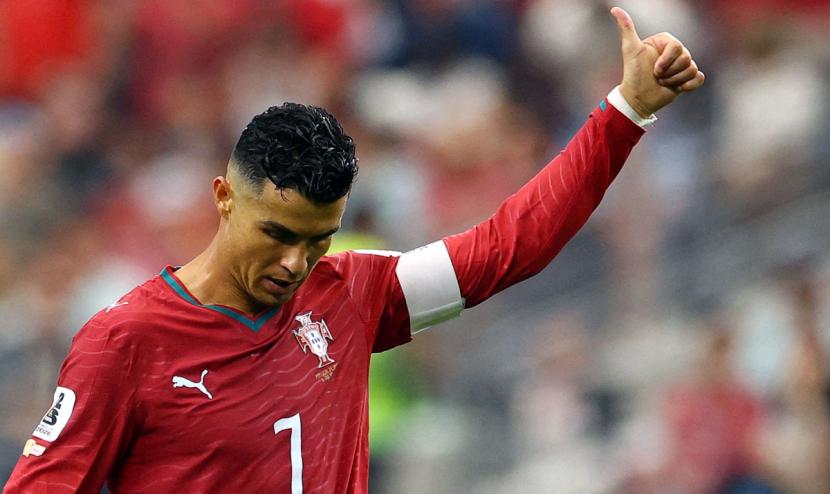
Cristiano Ronaldo’s retirement became official on 5 November 2026 when the Portugal captain confirmed that his extraordinary 23-year national team journey had ended. His farewell closed an era that began in 2003 and stretched across six World Cups. He departed with 146 international goals and 234 appearances, the leading totals in men’s international football.
At the centre of the story is more than a statistical farewell. Ronaldo was the reference point for several generations of Portuguese supporters, the face of a European championship triumph and a footballer who repeatedly changed how opponents prepared to face Portugal. His departure also creates immediate questions about leadership, attacking roles and the responsibilities of the next generation.
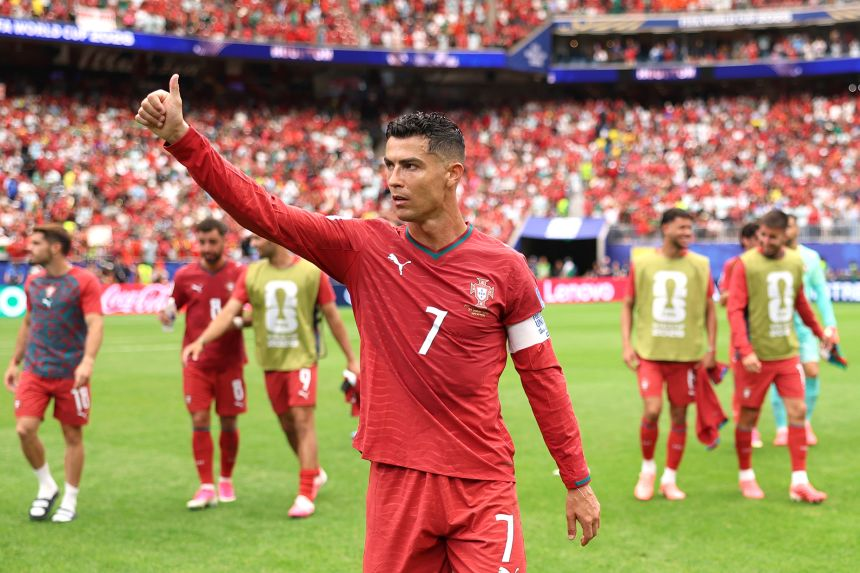
Quick answer: Ronaldo announced his retirement from Portugal on 5 November 2026 at age 41. Official football bodies confirm 146 goals in 234 games. His decision followed a difficult period involving the national-team coach, though the player’s farewell emphasised the emotion of leaving international duty. He remains a club player for Al Nassr.
146: International goals
234: Portugal appearances
2003–2026: International career
3: Major Portugal titles
Cristiano Ronaldo Retirement 2026: The Announcement and Its Meaning
The confirmation arrived through Ronaldo’s public farewell message on 5 November. He spoke about returning Portugal’s famous No. 7 shirt to the next generation and reflected on how representing the national team had shaped his life. The Portuguese Football Federation responded with recognition of his service and influence. Unlike a routine squad omission, this was a definitive decision to end his international career.
The retirement must be understood precisely. Ronaldo did not announce that he was leaving professional football altogether. FIFA reported that he would continue playing for Al Nassr in Saudi Arabia. The distinction matters because some searches for “Ronaldo retirement” refer to international football, while others ask whether the striker will stop playing for clubs as well.
Portugal’s recent campaign had also been unsettled. Reporting by Reuters and Associated Press describes a disagreement following his departure from the national-team camp and tension with coach Jorge Jesus. These reports provide important context; they should not be reduced to a single unsupported claim that one argument alone caused the retirement. Ronaldo’s own announcement stressed the difficulty and emotional importance of his decision.
| Key question | Verified answer |
|---|---|
| Announcement date | 5 November 2026 |
| Age at retirement | 41 |
| Portugal appearances | 234 |
| Portugal goals | 146 |
| International career began | August 2003 |
| Club career status | Continues with Al Nassr |
Why Did Cristiano Ronaldo Quit Portugal? The Context Behind the Decision

A relationship with the national team setup is under strain.
Ronaldo’s international career ended against a backdrop of tension within the Portugal setup. Coverage of the September international window described a disagreement over his role and a departure from camp. The coach subsequently indicated that the door remained open, but Ronaldo chose not to return. This sequence makes the circumstances unusual for a player whose career had been defined by a constant desire to represent his country.
It is tempting to identify one moment as the entire explanation. Yet a farewell after more than two decades usually has several dimensions: changing team needs, the realities of selection, the demands placed on an older forward and the knowledge that national teams must move ahead. These are analytical considerations rather than motives Ronaldo personally confirmed.
A forward still competing, but in a different phase
At 41, Ronaldo remained capable of scoring and contributing in decisive situations. His 2026 World Cup appearance added another chapter to an unprecedented tournament record. However, international football requires players to operate inside a compressed calendar, adapt to new tactics and accept selection choices that may change from match to match.
For Portugal, planning around a player of Ronaldo’s profile had always affected both the shape of the attack and the atmosphere surrounding the squad. International retirement removes that selection question. It also transfers the responsibility for goals, leadership and pressure moments to several players rather than one towering figure.
Cristiano Ronaldo, Portugal Career Statistics: What 146 Goals Reveal
The total of 146 goals is striking by itself, but a closer look at the distribution explains the endurance behind it. Ronaldo did not rely on a single tournament or a handful of unusually successful matches. He scored in European qualifying, World Cup qualifying, major finals and international friendlies. The breadth of these competitions shows why his record proved so difficult to match.
His 234 appearances also make his story one of longevity. A national-team career beginning as a teenage winger and ending as a veteran central forward required repeated adaptation to new coaches, tactical approaches and team-mates. Goals per appearance, calculated from the official totals, were approximately 0.62. That is a derived rate rather than an independently reported performance metric.
Ronaldo’s goals by competition

| Competition | Goals |
|---|---|
| European Championship qualifying | 41 |
| World Cup qualifying | 41 |
| International friendlies | 22 |
| UEFA Nations League | 15 |
| EURO final tournaments | 14 |
| World Cup final tournaments | 11 |
| FIFA Confederations Cup | 2 |
| Total | 146 |
European Championship qualifying
41
World Cup qualifying
41
International friendlies
22
UEFA Nations League
15
EURO final tournaments
14
World Cup final tournaments
11
FIFA Confederations Cup
2
Qualification accounts for a substantial share of the final tally: 41 goals in each of the two qualifying categories, or 82 combined. That is not a lesser form of international achievement; qualification campaigns are where national teams travel to very different opponents and must repeatedly produce results across multiple seasons.
The 14 EURO final goals and 11 World Cup final goals deserve separate emphasis. They were scored in the most closely watched tournaments, often against opponents with more preparation time and the resources to target Portugal’s leading scorer. Ronaldo’s record of scoring at six World Cups is particularly unusual because it spans an enormous part of a footballer’s working life.
What the scoring pattern says about his game
The record includes headers, penalties, powerful shots, runs behind defensive lines and finishes inside crowded penalty areas. Early in his career Ronaldo threatened defenders from wide positions with acceleration and direct dribbling. Later he became a specialist at finding scoring spaces, attacking crosses and converting chances with fewer touches.
That evolution matters when assessing the 146 goals. It is a reminder that longevity in football is not simply about staying fit. It also depends on learning which qualities to preserve and which aspects of a player’s role must change. Ronaldo transformed his attacking profile while continuing to deliver for the same national team.
From Sporting Prospect to Portugal Icon: A Career Timeline
Ronaldo’s international debut came on 20 August 2003 against Kazakhstan. Portugal were about to stage the following year’s European Championship, and the arrival of a young attacker created excitement without offering any guarantee of the historic career that would follow. The side still featured established personalities, including Luís Figo, and Ronaldo had to grow into his place.
- 2003: Debut against Kazakhstan; the international journey begins.
- 2004: First international goal at EURO 2004 as Portugal reach the final.
- 2006 First World Cup appearance and first World Cup goal.
- 2016: Captains Portugal during its successful UEFA EURO campaign.
- 2019: Portugal claim the inaugural UEFA Nations League title.
- 2021: Breaks the men’s international goals record previously held by Ali Daei.
- 2023: Becomes the first man to reach 200 senior international appearances.
- 2025: Portugal wins another UEFA Nations League title.
- 2026: Scores at a sixth World Cup and announces Portugal retirement in November.
A timeline also illustrates why Ronaldo’s impact is difficult to separate from Portugal’s modern football identity. The team evolved through several tactical generations, different coaches and a succession of midfielders and attackers. Ronaldo remained a connecting thread through each of those phases.
Readers following international football milestones often seek deeper context rather than a simple result. For a broader view of football coverage and sporting events, the Rapidnews247 includes a football category alongside other sports; its commercial platform claims should be assessed separately from this independent football analysis.
Three Trophies, Six World Cups and a Changing National Legacy
EURO 2016: the defining team achievement
Portugal’s victory at UEFA EURO 2016 gave Ronaldo the major senior international trophy that had escaped the team for generations. The triumph was not a story of one player carrying an entire tournament. Portugal needed collective defensive resilience, experienced midfield leadership and crucial performances from players throughout the squad.
The final against France showed that point vividly. Ronaldo was injured and could not complete the match, yet Portugal found a way to win through Eder’s extra-time goal. His absence during the decisive period did not diminish his contribution to the campaign; instead, it underlined how championship teams must function collectively.
Nations League success in 2019 and 2025
The two Nations League titles added different kinds of prestige. The first came when UEFA introduced a competition intended to make international fixtures more meaningful. By 2025, Portugal’s continued success demonstrated that the national programme had retained high standards across generations.
Ronaldo’s association with these three major trophies sits alongside a complicated World Cup story. He played in six editions and scored at every one, but never lifted the trophy. Portugal’s best World Cup finish during his participation was fourth in 2006. This combination of sustained individual brilliance and an unfulfilled global ambition is part of the balanced account of his legacy.
Why the six-World-Cup landmark stands apart
Many elite footballers have careers long enough to appear at three or four World Cups. Reaching six demands exceptional durability, consistency of selection and the ability to remain relevant while the sport itself changes. Ronaldo scored at each of his six tournaments, from 2006 through 2026, creating a historical benchmark built around consistency rather than one short peak.
The Final Portugal Chapter: World Cup Exit and September Appearance
Ronaldo’s last World Cup ended in 2026, when Portugal lost 1–0 to Spain in the round of 16, according to Reuters. The result ended another pursuit of football’s most famous international trophy. He had nevertheless added three goals during the tournament, and FIFA recognised his achievement of scoring at six separate World Cups.
His last appearance for Portugal came later, on 24 September 2026, in a 1–0 UEFA Nations League victory over Wales, according to contemporary Associated Press reporting. That match ultimately became his farewell appearance even though supporters did not know at the time that it would be the final occasion he wore the national shirt.
The distinction between the last World Cup match and last international appearance is important for factual SEO content. Articles that identify the World Cup exit as his final Portugal match would mislead readers. The national-team story continued into September before the announcement in November.
Ronaldo’s farewell did not follow the familiar script of an elaborate final home match planned months in advance. The circumstances were far more abrupt, leaving fans to look back on an ordinary competitive fixture as the closing chapter of a remarkable career.
Portugal After Ronaldo: How the Attack Can Evolve
Portugal enter the post-Ronaldo phase with a strong talent pool and a difficult strategic task. The first challenge is not simply replacing 146 international goals with one newcomer. Football rarely produces direct replacements for players who dominated a national side for more than two decades. The better question is how Portugal can distribute attacking responsibility.
More fluid movement across the front line
Without a fixed focal point of Ronaldo’s stature, Portugal could use greater positional rotation among its forwards. That might allow wingers to move inside, midfield runners to attack the box and the centre-forward to link play rather than remain the main finishing target. The exact approach will depend on coach selection and opponent, so it should not be presented as an announced tactical change.
Leadership beyond the captain’s armband
Ronaldo’s departure leaves a symbolic opening as well as a tactical one. Leadership in an international side is expressed through daily preparation, communication and composure under pressure. Established players such as Bruno Fernandes and Bernardo Silva have experience at club and international level; younger players can develop around that core.
This transition may eventually give Portugal greater flexibility, but it will also be judged in the most unforgiving circumstances: major qualifying fixtures and knockout matches. A side can enjoy more tactical freedom while still missing the belief that a legendary scorer supplied in difficult moments. Both possibilities are valid, and upcoming results will offer better evidence than immediate predictions.
What Happens Next for Ronaldo at Club Level?
International retirement does not automatically mean retirement from all professional football. As of the announcement, Ronaldo continued with Saudi Arabian club Al Nassr. The club environment has a different calendar and training rhythm, and it allows him to focus on matches without leaving regularly for international windows.
Whether he eventually reaches additional personal scoring milestones is a separate story from his Portugal farewell. Future goals and contract decisions should be checked against official records rather than treated as inevitable. The international figures of 146 goals and 234 caps, however, are fixed at the moment of his national-team retirement.
The difference also matters for searchers using phrases such as “is Ronaldo still playing?” A correct answer must state which type of football is being discussed. He has retired from Portugal duty, but reports at the time of the announcement say he remains active at club level. Any later change to that status should be reflected through a dated article update.
Cristiano Ronaldo Retirement FAQs
When did Cristiano Ronaldo retire from Portugal?
He announced his retirement from the Portuguese national team on 5 November 2026. He was 41 and had represented the country since August 2003.
How many goals did Ronaldo score for Portugal?
UEFA and FIFA confirm 146 goals in 234 senior international appearances. Both are record totals in men’s international football at the time of his retirement.
Why did Ronaldo stop playing internationally?
His farewell emphasised that the decision was emotional and that the national-team shirt should pass to the next generation. Reporting also described tension with Portugal’s coaching setup, but no single motive should be presented as the whole explanation.
What was Ronaldo’s last Portugal match?
His final appearance was the 1–0 Nations League victory over Wales on 24 September 2026, according to contemporary reports. That was later recognised as his last game for Portugal.
Did Cristiano Ronaldo ever win a World Cup?
No. He played at six World Cups and scored at all six, but Portugal did not win the trophy during his international career. His major Portugal honours include EURO 2016 and Nations League titles in 2019 and 2025.
Is Ronaldo still playing for Al Nassr?
At the time he announced his international retirement in November 2026, FIFA and news reports said he would continue at Al Nassr. International retirement and club retirement are separate decisions.
Conclusion: A Different Portugal, and a Record That Will Endure
The Cristiano Ronaldo retirement announcement marks a turning point for Portugal. Across 23 years, he went from a promising winger to the captain and record scorer of a national team that won its first European Championship and two Nations League titles. He finished with 146 goals, 234 caps, six World Cup appearances and an influence that cannot be fully expressed in a spreadsheet.
What happens next is a story with two tracks. Portugal must build a new attacking identity while respecting the foundations of its most recognisable modern player. Ronaldo can continue his club career without international commitments. The two stories will remain connected by the extraordinary standard he established in the national shirt.
For the official historical record behind the scoring totals, readers can consult UEFA’s international goals record, updated after his retirement announcement.